
Why Spring is Greece at Her Most Honest
On shoulder-season magic, the islands most tourists never find, and why I’ll carry this country with me even in the years I can’t get back.
I have been to Greece more times than I can count precisely, and I am no closer to being finished with it. Every trip reveals something I missed the last time — a village I hadn’t found, a coastline that turned out to be different from what I’d remembered, a conversation over mezze and sparkling water that shifted something in me. Greece does not give itself up all at once. That’s the whole point.
I won’t make it there this year, and I won’t pretend that doesn’t sting. But spring in Greece is on my mind — it always is this time of year — and I want to make the case for it, because I think it’s the most underestimated travel season in one of the world’s most visited countries.
The light, first of all
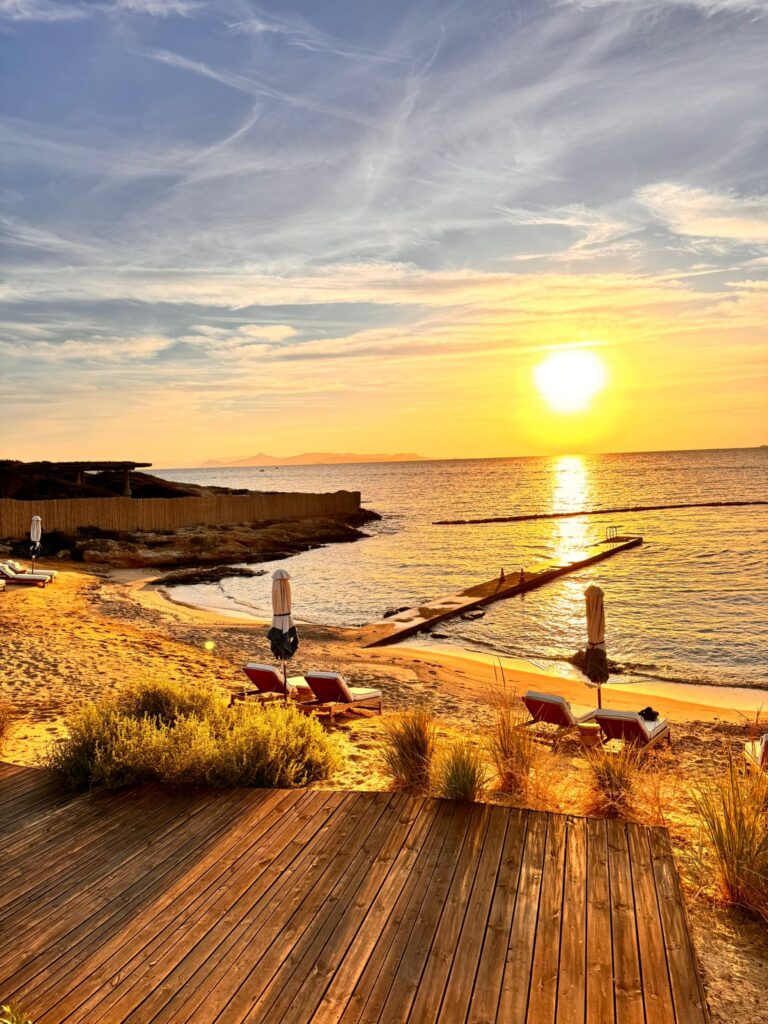
You have to start with the light. April light in Greece is softer than the scorching clarity of July, but it’s warm enough to turn an evening on the Athens Riviera into something that stays with you for years. The sun sets slowly, lingers over the water, and the quality of gold it leaves behind is different from anywhere else I’ve been. This is not poetic exaggeration — it’s just accurate. Photographers know it. Painters have always known it. If you’ve experienced it, you know exactly what I mean.
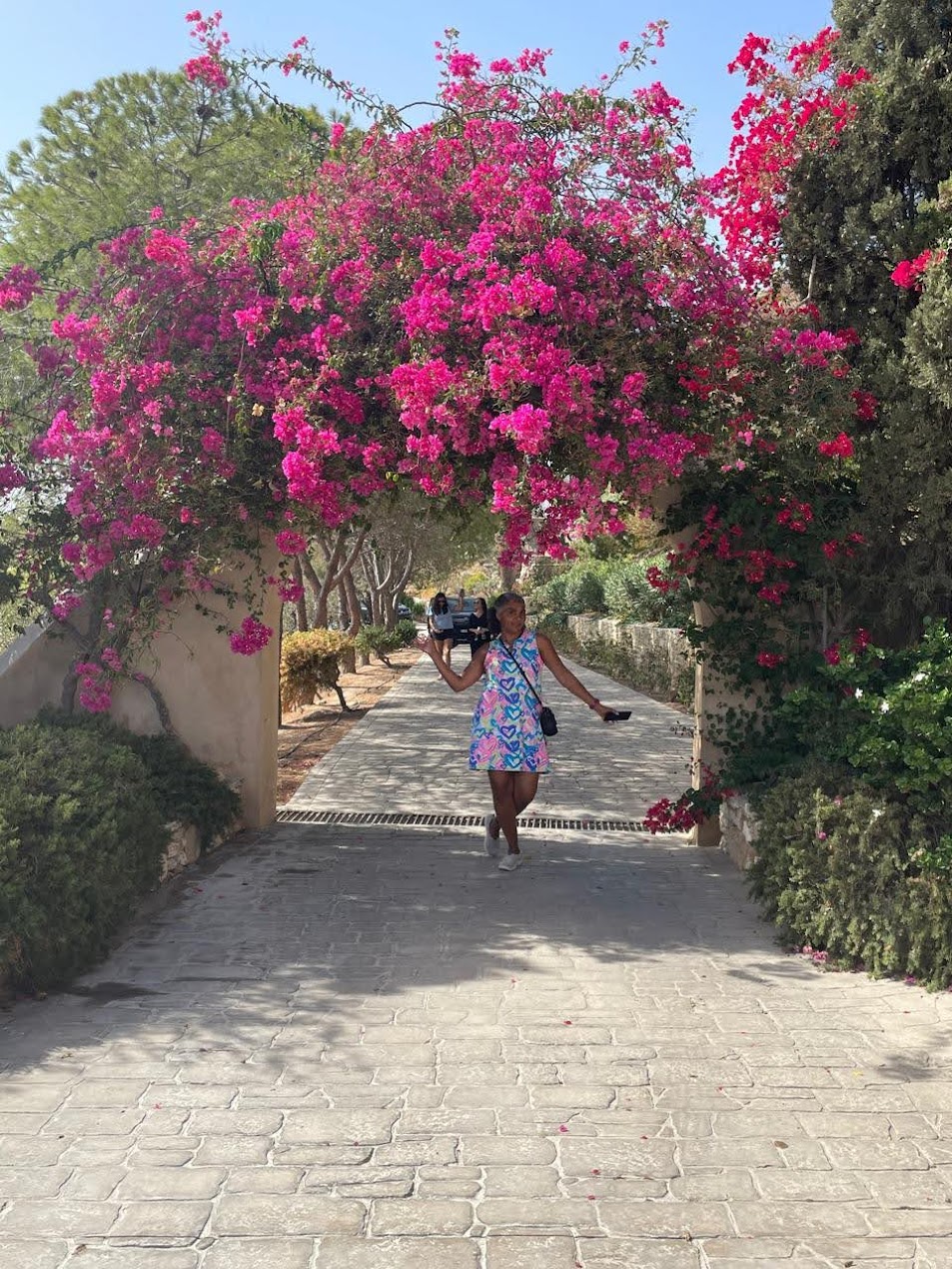
The hillsides are still green in April and May, in a way that they won’t be by August when the landscape has gone dry and blonde. The wildflowers are extraordinary — tucked into stone walls, cascading off terraces, spilling over the edges of roads that wind up into the mountains. In Paros, the bougainvillea is so aggressively, exuberantly pink that it stops you mid-step. You just stand there and let it happen.
The villages before the summer arrives
Something changes in Greek villages in summer. They’re still beautiful — of course they are — but they’re also busy in a way that changes the texture of the place. The cafes are full, the lanes are crowded, and the rhythms of daily life get compressed and rearranged around the needs of visitors.
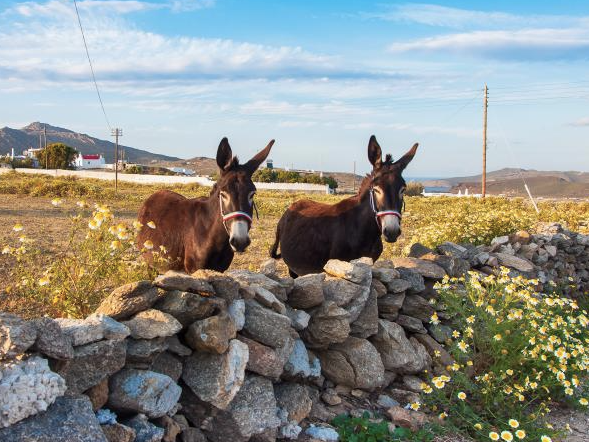
In spring, you get the village as it actually is. You hear it — a bell from a church up the hill, someone’s conversation drifting through an open window, the unhurried sound of animals moving on a stone path. The mountain villages of the interior, where donkeys still stand on dry-stacked walls regarding you with enormous calm, feel in spring like places that belong entirely to themselves. You’re a guest, not a customer. That distinction is significant.
The Athens Riviera, unhurried
People who haven’t been to Athens recently are often surprised to hear about the Riviera — the stretch of coastline south of the city, running down toward Cape Sounion, where the Temple of Poseidon stands on a cliff above the sea as if it simply grew there. In summer it can be crowded and logistically complicated. In April it’s something else entirely.
A sunset over the Saronic Gulf in spring, with the city behind you and the water going from blue to copper to rose, is one of those experiences that recalibrates your sense of what an evening can be. I’ve sat on that coast and understood, again, why the ancient Greeks built temples on every promontory they could find.
Astypalea, and the islands that don’t advertise themselves
Most people who visit Greece see the same islands. Santorini, Mykonos, perhaps Rhodes or Corfu — all of them genuinely worth visiting, all of them beautiful, none of them secrets. I love the Cyclades deeply and will defend Mykonos against anyone who dismisses it too quickly. But Greece has dozens of inhabited islands, and some of them are extraordinary in ways that require a little more intention to discover.
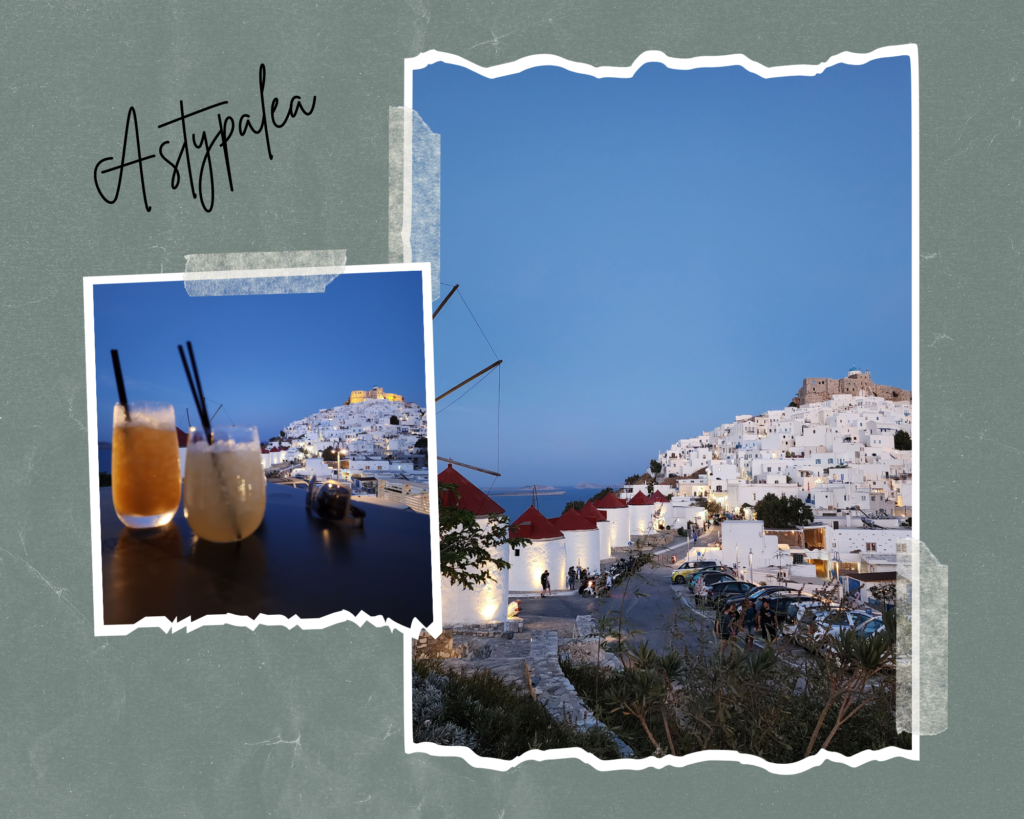
Astypalea is one I return to in my mind constantly. It’s shaped like a butterfly — two lobes of land connected at a narrow isthmus — and it sits in the Dodecanese in a way that feels removed from the usual tourist circuits. The kastro above the Chora is one of the most beautiful fortified villages in the Aegean, gleaming white against the blue sky, with a windmill silhouette that feels almost too perfectly composed to be real. And in spring, with almost no one around, you walk those lanes with a feeling that you’ve been let in on something private.
This is what I try to give every client I send to Greece — not the postcard version, but the one with donkeys on a stone wall and a flag lifting in the wind above a quiet village square, and a local restaurant where the owner brings you something you didn’t order because he thinks you should try it, and he’s right.
There is no wrong time to go
I’ll be honest about why I recommend planning Greece a little ahead: the best properties book early, the best experiences require relationships to arrange, and a trip built carefully over several months is a fundamentally different thing from a trip assembled in a hurry. When I work with clients on Greece, I’m drawing on years of personal travel there — every island I’ve walked, every guide I trust, every hidden restaurant and overlooked village and perfect sunset terrace. That’s not something you get from a search engine.
Greece is extraordinary in every season — spring’s wildflowers and quiet villages, summer’s electric energy, autumn’s golden light and harvest tables, and yes, even Christmas, when the villages take on a warmth and intimacy that most travelers never think to seek out. There is no wrong time to go. There is only the right trip, thoughtfully planned
If Greece has been on your list — whether you’re dreaming of spring, summer, or something altogether different — I’d genuinely love to help you get there, and to get there well
From somewhere between Portland and the Aegean . . .